Platform comparison
| Platform | YES odds | NO odds | Fee | KYC | Settlement | |
|---|---|---|---|---|---|---|
Polymarket (via Prediction Market UK) Pick polygram.ink (preferred broker) |
57% | 43% | 0% (USDC on-chain) | No-KYC up to $1,500 | USDC, auto via UMA oracle | See live odds → |
Polymarket (direct) polymarket.com |
57% | 43% | 0% | Geo-blocked in US/UK/EU | USDC, on-chain | See live odds → |
Kalshi kalshi.com |
— | — | Up to 7% per trade | US-only, KYC required | USD | See live odds → |
Betfair Exchange betfair.com |
— | — | 2-5% commission | Full KYC from first trade | GBP / EUR | See live odds → |
Manifold Markets manifold.markets |
— | — | Play-money (mana) | None — play-money | Mana (no cash-out) | See live odds → |
Outcome probabilities
Current market-implied probability for each outcome, from the live order book.
| Outcome | Probability |
|---|---|
| December 31 | 57% |
| October 31 | 42% |
| September 30 | 24% |
| August 31 | 11% |
| July 15 | 0% |
| July 31 | 0% |
Market context
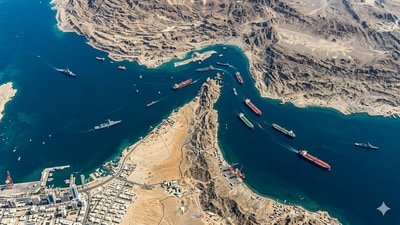
A **Yes** share pays out if Iran officially announces and starts collecting a mandatory fee, toll, charge, tariff or similar payment from commercial vessels for passage through the Strait of Hormuz before the deadline; a **No** share wins if there is no such formal, generalised charge in force. In practical terms, the market is about whether Tehran moves from rhetoric or ad hoc demands to a publicly announced policy that applies to ships as a rule, rather than a one-off payment or isolated screening cost. [1][2][7]
Recent reporting makes the baseline unusually high, but also shows why the market can stay below certainty. Bloomberg said in March that Iran had begun charging some commercial vessels on an ad hoc basis, with payments of up to $2 million per voyage, yet the mechanism was not systematic[1]. Reuters later reported that Iran was discussing fees as part of a broader passage arrangement, while also noting the legal objection that coastal states cannot charge simply for transit through an international strait[7][11][14]. That split matters for prediction markets: traders usually distinguish between informal extraction, service fees, and a formal tariff regime that is clearly announced and broadly applied.
The main catalysts are official statements from Iran’s foreign ministry, maritime authorities, or parliament, plus any memorandum with Oman or the US that sets a fee schedule or begins collection. Reuters reported on 6 August that fee discussions were still active, with Tehran seeking 5%–7% of cargo value, Oman discussing around 3%, and Washington opposing any fee at all[11]. Watch for whether any arrangement is described as voluntary or service-based, because this market only resolves **Yes** if the charge is mandatory for passage or access, not if it is framed as optional or merely compensatory. [2][4][14]
Methodology
This page is a comparison snapshot: one live quote, four reference venues with their key attributes, and a single execution path — every trade button routes to Prediction Market UK, which mirrors the Polymarket order book directly.
Resolution & payout
Settlement runs on-chain. Polymarket's contract logic separates YES and NO shares as conditional tokens; at resolution the winning share lifts to $1.00 and the losing one to $0. The outcome input comes from the UMA Optimistic Oracle, which secures against bad resolution with a bond + dispute window.
Once finalised, the smart contract pays USDC to the holders' wallets within minutes — no withdrawal fees beyond Polygon network gas. Kalshi settles in USD via CFTC clearance, Betfair in account currency net of commission, Manifold in play-money mana with no cash-out.
UK Frequently Asked Questions
- How does resolution work?
- Through the UMA Optimistic Oracle on Polygon: a proposer submits the outcome, a two-hour challenge window opens, and USDC payouts settle automatically once the result is final.
- What's the difference between YES and NO shares?
- A YES share pays $1.00 if the event happens, $0 otherwise. A NO share pays $1.00 if the event doesn't happen. The market price between 0¢ and 100¢ is the implied probability.
- Is Polymarket legal in the UK?
- Polymarket is accessible to UK traders but is not UKGC-licensed. It operates under US CFTC jurisdiction. UK residents face no domestic legal prohibition on using it, but UKGC consumer protections do not apply. For UKGC-regulated alternatives, Betfair Exchange and Smarkets offer similar prediction-style markets.
- Do I pay tax on prediction market profits in the UK?
- UKGC-licensed platform profits (Betfair, Smarkets) are typically tax-free gambling winnings for UK individuals. Polymarket profits involve USDC crypto transactions, which HMRC treats as Capital Gains Tax events. Keep full transaction records and report via Self Assessment if gains exceed £3,000 per tax year.
- How do I deposit on Polymarket from the UK?
- UK traders typically fund Polymarket via Coinbase UK, Kraken or Revolut — buying USDC with GBP and transferring to a Polygon-compatible wallet (MetaMask, Coinbase Wallet). Polymarket's onboarding walks you through the bridging process. Typical GBP-to-USDC conversion costs 0.5–1%.
%22%2F%3E%3Cpath%20d%3D%22M%206%2066%20A%2026%2026%200%200%201%2058%2066%22%20fill%3D%22%23E6B98D%22%20opacity%3D%220.9%22%2F%3E%3Ccircle%20cx%3D%2232%22%20cy%3D%2226%22%20r%3D%2222%22%20fill%3D%22%23F5CBA7%22%2F%3E%3Crect%20x%3D%2210%22%20y%3D%224%22%20width%3D%2244%22%20height%3D%2214%22%20rx%3D%227%22%20fill%3D%22%23be123c%22%20opacity%3D%220.9%22%2F%3E%3Crect%20x%3D%228%22%20%20y%3D%2218%22%20width%3D%228%22%20%20height%3D%2218%22%20rx%3D%224%22%20fill%3D%22%23be123c%22%20opacity%3D%220.7%22%2F%3E%3Crect%20x%3D%2248%22%20y%3D%2218%22%20width%3D%228%22%20%20height%3D%2218%22%20rx%3D%224%22%20fill%3D%22%23be123c%22%20opacity%3D%220.7%22%2F%3E%3C%2Fsvg%3E) and
and%22%2F%3E%3Cpath%20d%3D%22M%206%2066%20A%2026%2026%200%200%201%2058%2066%22%20fill%3D%22%23E6B98D%22%20opacity%3D%220.9%22%2F%3E%3Ccircle%20cx%3D%2232%22%20cy%3D%2226%22%20r%3D%2222%22%20fill%3D%22%23F5CBA7%22%2F%3E%3Cpath%20d%3D%22M%2010%2026%20A%2022%2028%200%200%201%2054%2026%22%20fill%3D%22%23be123c%22%20opacity%3D%220.9%22%2F%3E%3C%2Fsvg%3E)
Trade Iran charges Hormuz fees by 2026? on Prediction Market UK
Live order book, 0% fees, USDC settlement in seconds.
Open live market →