Market statistics
- Total volume
- $2.8M
- 24h volume
- $228K
- Liquidity
- $297K
- Open interest
- $1.2M
Platform comparison
| Platform | YES odds | NO odds | Fee | KYC | Settlement | |
|---|---|---|---|---|---|---|
Polymarket (via PolyGram) Pick polygram.ink (preferred broker) |
3% | 97% | 0% (USDC on-chain) | No-KYC up to $1,500 | USDC, auto via UMA oracle | See live odds → |
Polymarket (direct) polymarket.com |
3% | 97% | 0% | Geo-blocked in US/UK/EU | USDC, on-chain | See live odds → |
Kalshi kalshi.com |
— | — | Up to 7% per trade | US-only, KYC required | USD | See live odds → |
Betfair Exchange betfair.com |
— | — | 2-5% commission | Full KYC from first trade | GBP / EUR | See live odds → |
Manifold Markets manifold.markets |
— | — | Play-money (mana) | None — play-money | Mana (no cash-out) | See live odds → |
Outcome snapshot
Current YES/NO probability from the live order book.
Market context
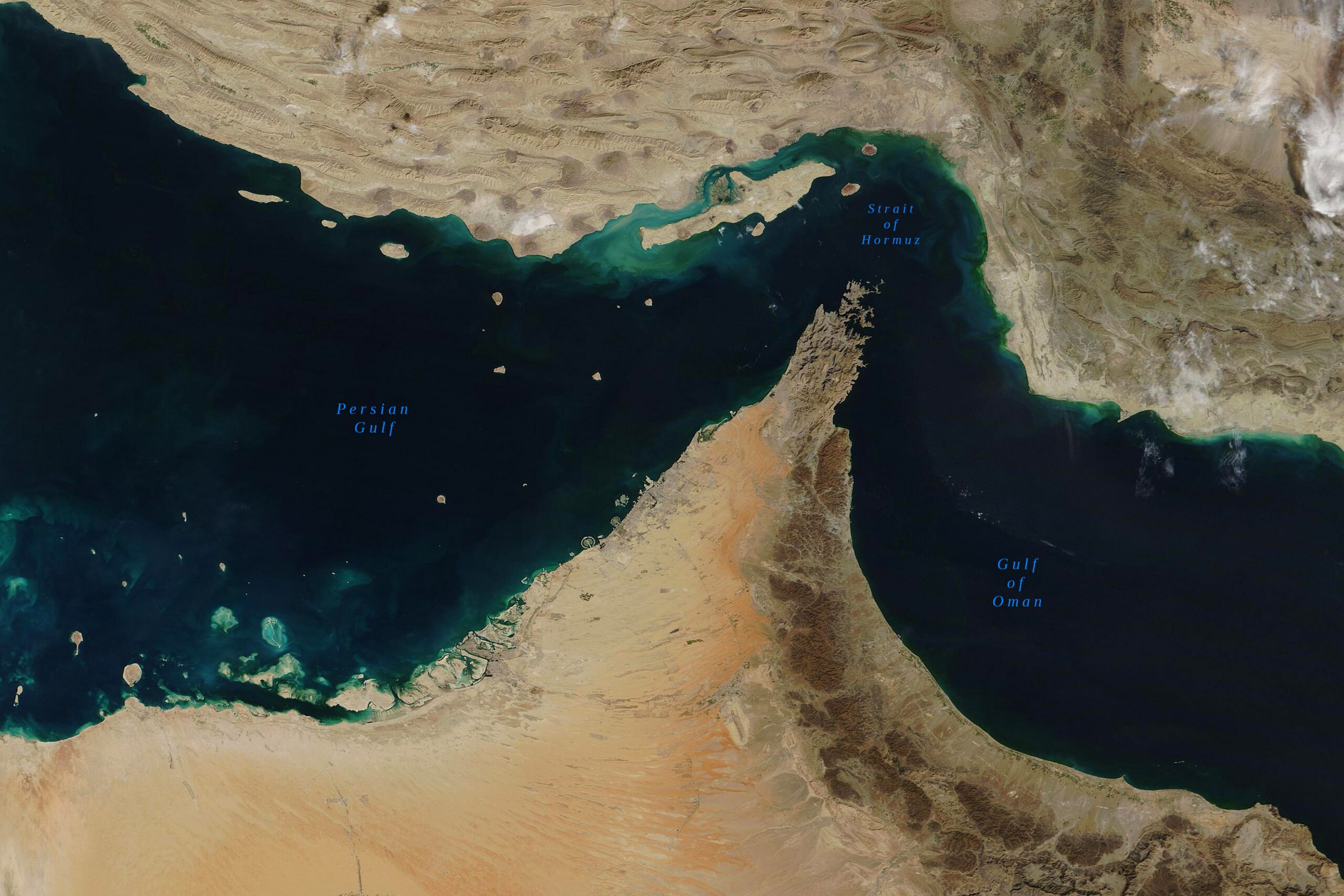
The Strait of Hormuz, a 54-kilometre waterway between Iran and Oman, handles roughly one-third of global seaborne oil trade. Transit volumes have fluctuated significantly since 2019 owing to US sanctions, regional tensions, and periodic incidents involving tanker seizures and attacks. The IMF Portwatch database tracks daily vessel arrivals—container ships, bulk carriers, tankers, and general cargo vessels—providing a real-time measure of chokepoint congestion. A 7-day moving average of 60 daily transits would represent a return to pre-disruption baseline levels observed in 2018–2019. The current 4% probability reflects market scepticism that such normalisation will occur within the next 18 months.
Prediction markets express this uncertainty through YES and NO shares. Buying a YES share means wagering that the 7-day average will hit 60 or above by mid-June 2026; buying a NO share bets it will not. The 4% price implies traders assign roughly 96% confidence to sustained disruption or continued suppression of traffic.
Key catalysts include diplomatic breakthroughs between the US and Iran—particularly any sanctions relief—and resolution of Houthi attacks on shipping in the Red Sea, which have redirected vessels away from the Strait since late 2023. Traders should monitor announcements from the US State Department, OPEC production decisions, and IMF Portwatch data releases for weekly transit trends. Recent reports from maritime security firms indicate attacks have declined but remain a deterrent to normal routing.
Wikipedia Context
-
 Strait of Hormuz
The Strait of Hormuz is a waterway between the Persian Gulf and the Gulf of Oman. On the north coast lies Iran, and on the south coast lies the Musandam Peninsula under the Musandam Governorate of Oman, with a portion of the southwest of the peninsula under the United Arab Emirates. The strait is about 104 miles long, with a width varying from about 60 mi to
-
 Battle of the Strait of Hormuz (1553)
The Battle of the Strait of Hormuz was fought in August 1553 between an Ottoman fleet, commanded by Admiral Murat Reis, against a Portuguese fleet of Dom Diogo de Noronha. The Turks were forced to retreat after clashing with the Portuguese.
-
 2026 Strait of Hormuz crisis
Shipping traffic through the Strait of Hormuz, a major maritime choke point for world energy trade, has been largely blocked by Iran since 28 February 2026, when the United States and Israel launched an air war against Iran and assassinated its supreme leader, Ali Khamenei. In retaliation, Iran launched missile and drone attacks on Israel, US military bases,
Methodology
Methodologically we separate two layers: the live probability (Polymarket mid-price) and the platform attributes (fee, KYC, settlement currency, payment rails). That keeps the comparison honest — a single canonical probability across the row, with the venue-by-venue trade-offs spelt out in the columns next to it.
Resolution & payout
At resolution the UMA oracle takes over: a proposer posts the outcome with a bond, any token holder can dispute within two hours. Without dispute the result is accepted and the smart contract distributes USDC instantly.
On Kalshi (CFTC-regulated) resolution runs through their in-house clearing engine in USD. Betfair Exchange settles after match end in the account's local currency. Manifold pays no cash — only its in-platform "mana" currency.
FAQ
- Where can I trade this market with the lowest fees?
- Polymarket is geo-blocked in the US/UK/EU. The easiest 0%-fee broker into the same order book is PolyGram. Kalshi charges up to 7% per trade; Betfair Exchange takes 2-5% commission on net winnings.
- Is this market available outside the US?
- Polymarket itself is geo-blocked in the US/UK/EU. Always check the legal status of prediction markets in your jurisdiction before trading.
- What's the difference between YES and NO shares?
- A YES share pays $1.00 if the event happens, $0 otherwise. A NO share pays $1.00 if the event doesn't happen. The market price between 0¢ and 100¢ is the implied probability.
- Do I need to KYC for this market?
- On Polymarket directly, no — it's wallet-based. Intermediary brokers like PolyGram trigger KYC only above $1,500 of lifetime trading volume; under that you trade pseudonymously with a single wallet address.
- How reliable are the quoted odds?
- The YES/NO percentages are the live mid-prices of the Polymarket order book. On deep markets they move every few seconds; on thinner ones you'll see short plateaus.
Trade Strait of Hormuz traffic returns to normal by June 15? on PolyGram
Live order book, 0% fees, USDC settlement in seconds.
Open live market →