Market statistics
- Total volume
- $608K
- 24h volume
- $364K
- Liquidity
- $9K
- Open interest
- $3K
- Comments
- 3
Available prediction outcomes (19)
Sorted by descending live probability. Click any outcome to trade it on PolyGram.
Market context
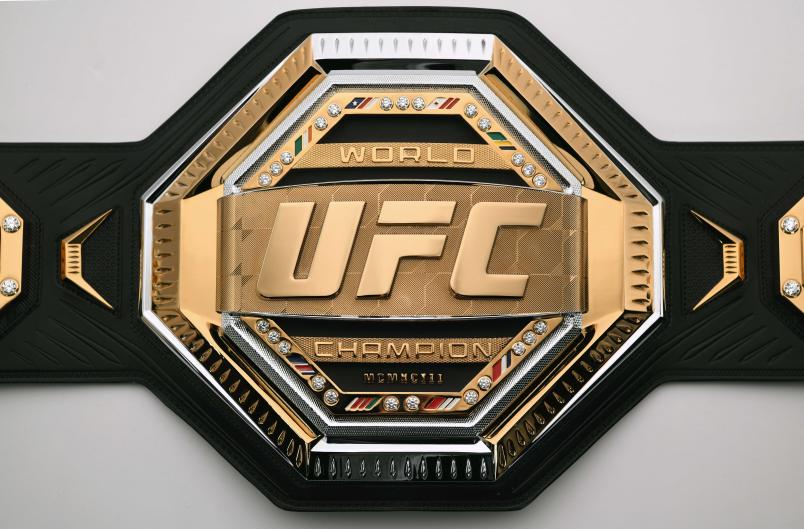
The UFC Welterweight division will have a single official champion on 31 December 2026. A YES share represents a bet that one specific fighter holds that title; a NO share bets that either a different fighter or no one holds it (if the belt is vacant). The 1% implied probability reflects the market's assessment that the current champion—or whoever holds the belt by year-end—is unlikely to be the one named in the market's resolution criteria, suggesting either high turnover expected or significant uncertainty about the division's landscape over the next two years.
Welterweight title reigns in the UFC typically last 12–36 months, though injuries, retirements and competitive upsets create volatility. Kamaru Usman held the belt for roughly two years before losing to Leon Edwards in 2023; Edwards then held it for approximately one year before Belal Muhammad claimed it in August 2024. This pattern of relatively frequent transitions means the probability of any single fighter retaining or reclaiming the title through December 2026 depends heavily on their current health, ranking position and scheduled challengers over the next 24 months.
Key catalysts include the UFC's title-defence schedule, injury announcements and retirement statements from top contenders. Traders should monitor official UFC rankings and fighter health updates, particularly for the current champion and top-five contenders. Major title fights typically occur every 3–4 months, meaning 5–7 title bouts could occur before the resolution date. Any unexpected retirement or long-term injury to leading contenders would shift probabilities significantly, as would dominant performances by rising challengers currently outside the top tier.
Methodology
Methodologically we separate two layers: the live probability (Polymarket mid-price) and the platform attributes (fee, KYC, settlement currency, payment rails). That keeps the comparison honest — a single canonical probability across the row, with the venue-by-venue trade-offs spelt out in the columns next to it.
Resolution & payout
Polymarket-based markets settle through the UMA Optimistic Oracle on Polygon. A proposer submits the outcome, a two-hour challenge window opens, and unchallenged proposals finalise the resolution. Payouts settle automatically in USDC the moment the result is final — no bookmaker, no delay.
Kalshi-based markets settle in USD via the CFTC-regulated clearinghouse. Betfair Exchange settles in GBP/EUR net of commission. Manifold is play-money and does not pay out real funds.
FAQ
- Is this market available outside the US?
- Polymarket itself is geo-blocked in the US/UK/EU. Always check the legal status of prediction markets in your jurisdiction before trading.
- How does resolution work?
- Through the UMA Optimistic Oracle on Polygon: a proposer submits the outcome, a two-hour challenge window opens, and USDC payouts settle automatically once the result is final.
- What does Polymarket cost to trade?
- Polymarket itself charges 0% — the only cost is the Polygon network fee, typically under $0.01 per transaction. Off-chain venues like Kalshi or Betfair charge 2-7% commission.
- How fast are USDC deposits?
- Polygon credits deposits after 12 confirmations — usually under 30 seconds. Withdrawals follow the same path and land back in your wallet within minutes.
- How reliable are the quoted odds?
- The YES/NO percentages are the live mid-prices of the Polymarket order book. On deep markets they move every few seconds; on thinner ones you'll see short plateaus.
Trade Who will be UFC Welterweight champion at the end of … on PolyGram
Live order book, 0% fees, USDC settlement in seconds.
Open live market →